Specifying casework for commercial residential builds demands a completely different approach than single-family custom work. In market-rate multifamily developments, student housing, and active senior living communities, cabinets are high-contact structural assets that undergo non-stop operational wear. For general contractors, commercial developers, and lumberyard suppliers, cabinet specifications directly influence punch-list resolution, turnover costs, and project handoff schedules.
A spec sheet driven strictly by low upfront bids often triggers downstream budget overruns through field modifications, moisture degradation, and extended factory lead times. Below is a practical guide to engineering casework specifications that satisfy tenant usability, universal design, and aggressive delivery timelines across Minnesota jobsites.
1. Box Construction: Plywood vs. Particleboard in High-Turnover Environments
The most critical structural decision occurs at the carcass level. High-density residential housing—especially rental units and senior living spaces—subjects casework to frequent cleaning, high humidity, and heavy shelf loading.
- Engineered Particleboard / Melamine: While low on initial takeoff costs, standard particleboard cores carry structural liabilities. Minor plumbing leaks under sinks or around dishwashers rapidly swell the core material, leading to fastener pull-out, sagging shelves, and premature replacement. On job sites, dropped panels or moisture exposure during rough-in stages can ruin boxes before inspection.
- All-Plywood Box Construction: For long-term asset management, an all-plywood box is the industry standard for durability. Multi-ply cabinet boxes retain structural rigidity, support heavy stone or solid-surface tops without intermediate bowing, and anchor hinge plates securely under repetitive cycling. Eliminating particleboard prevents catastrophic moisture failures and extends asset life cycles over multiple tenant turns.
2. Hardware and Drawer Engineering
Hardware failure represents the primary driver of commercial maintenance calls. Value-engineering the drawer box or hinge selection typically shifts costs directly to property management maintenance budgets.
Dovetail Drawer Boxes
Stapled or pinned butt-joint drawers degrade rapidly under repeated load cycles. Specifying solid wood or multi-layer plywood drawer boxes with dovetail joinery guarantees structural longevity. Dovetail joints distribute pull forces across interlocking mechanical connections, preventing front-panel separation even in high-use multi-tenant environments.
Soft-Close Hardware as a Functional Standard
Soft-close hinges and full-extension undermount slides are no longer luxury upgrades—they are sound mitigation and asset protection tools. Soft-close mechanisms prevent cabinet frames from cracking under repeated impact, reduce vibration against drywall anchors, and eliminate noise transmission across demising party walls in senior living and multi-unit projects.
3. Senior Housing Considerations: ADA and Universal Design
Senior housing developments require proactive detailing to meet Fair Housing Act (FHA) requirements and Americans with Disabilities Act (ADA) accessibility standards without sacrificing standard unit aesthetic continuity.
- Adaptable Base Cabinets: Under-sink and cooktop areas in adaptable units should be framed to permit removable fronts and floor liners. When converted for wheelchair access, the cabinet core must maintain structural integrity while providing required knee and toe clearances.
- Hardware Usability: Specify hardware that accommodates residents with arthritis or limited grip strength. European concealed hinges with wide opening angles (110 degrees or higher) improve interior visibility and reach.
- Contrast and Finishes: For aging eyes, matte finishes help diffuse glare from overhead task lighting while hiding scuffs and fingerprints better than high-gloss coatings. Ensure finish schedules provide clear visual contrast between countertop edges, door faces, and surrounding floor coverings.
4. Mitigating Procurement Risks: Lead Times and Staging
Cabinet installation falls near the critical path of any commercial residential project. Countertop templating, final plumbing trim, appliance installation, and certificate of occupancy (CO) inspections all bottleneck at casework delivery. Late shipments ripple across all remaining finish trades.
Many offshore or regional commercial suppliers quote 8–12 week factory lead times. However, custom factory runs expose developers to extensive project risks:
- Transit Delays: Ocean shipping bottlenecks or single-source production shutdowns can halt drywall-to-finish transitions.
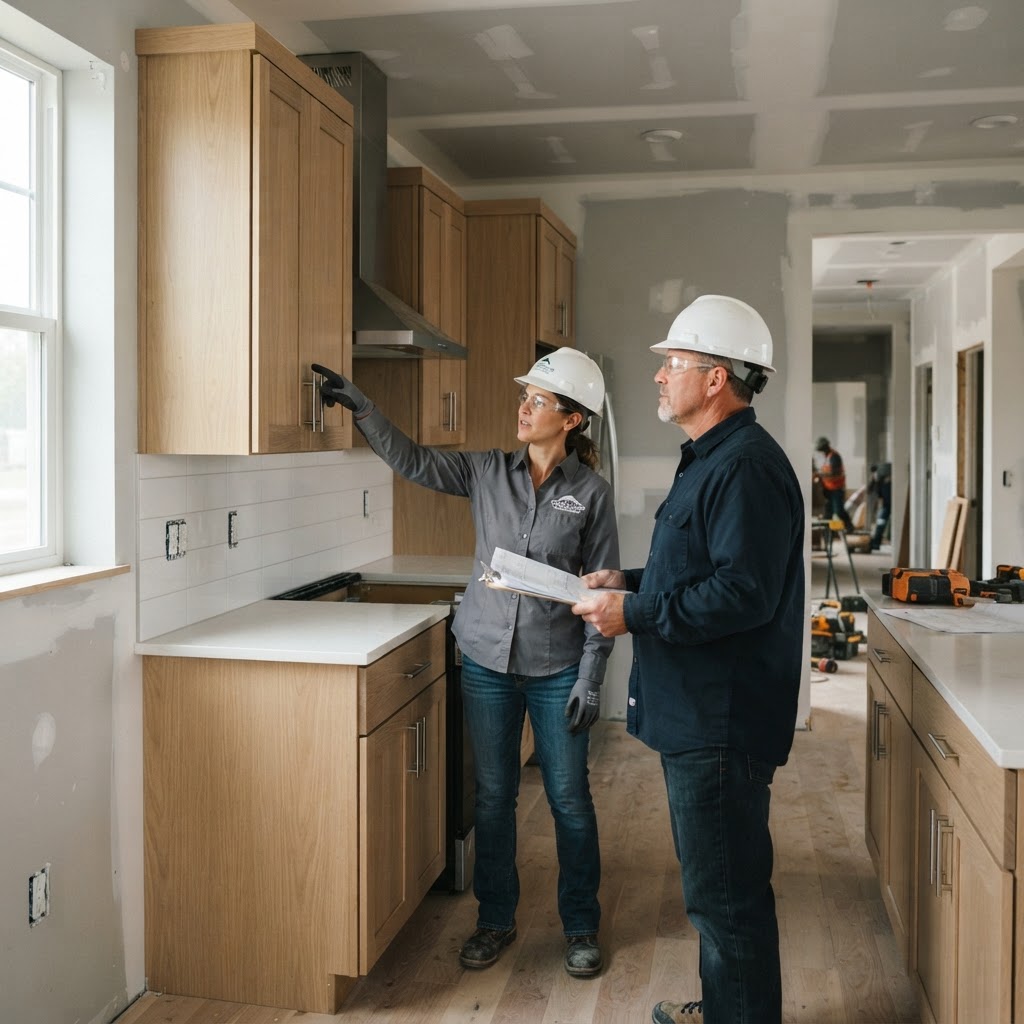
- Punch-List Vulnerability: If a field modification requires three extra fillers, two replacement door fronts, or an altered sink base, reordering from an 8-week production queue stalls unit delivery.
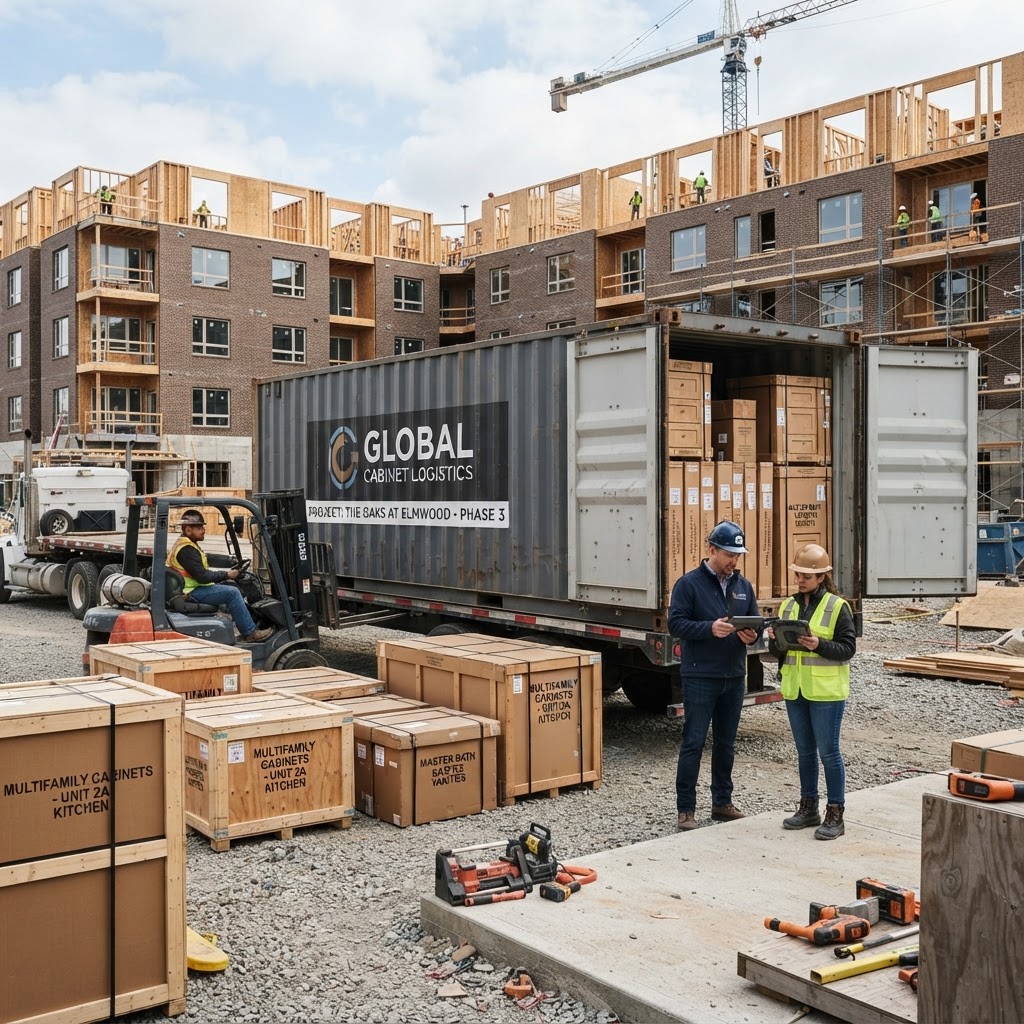
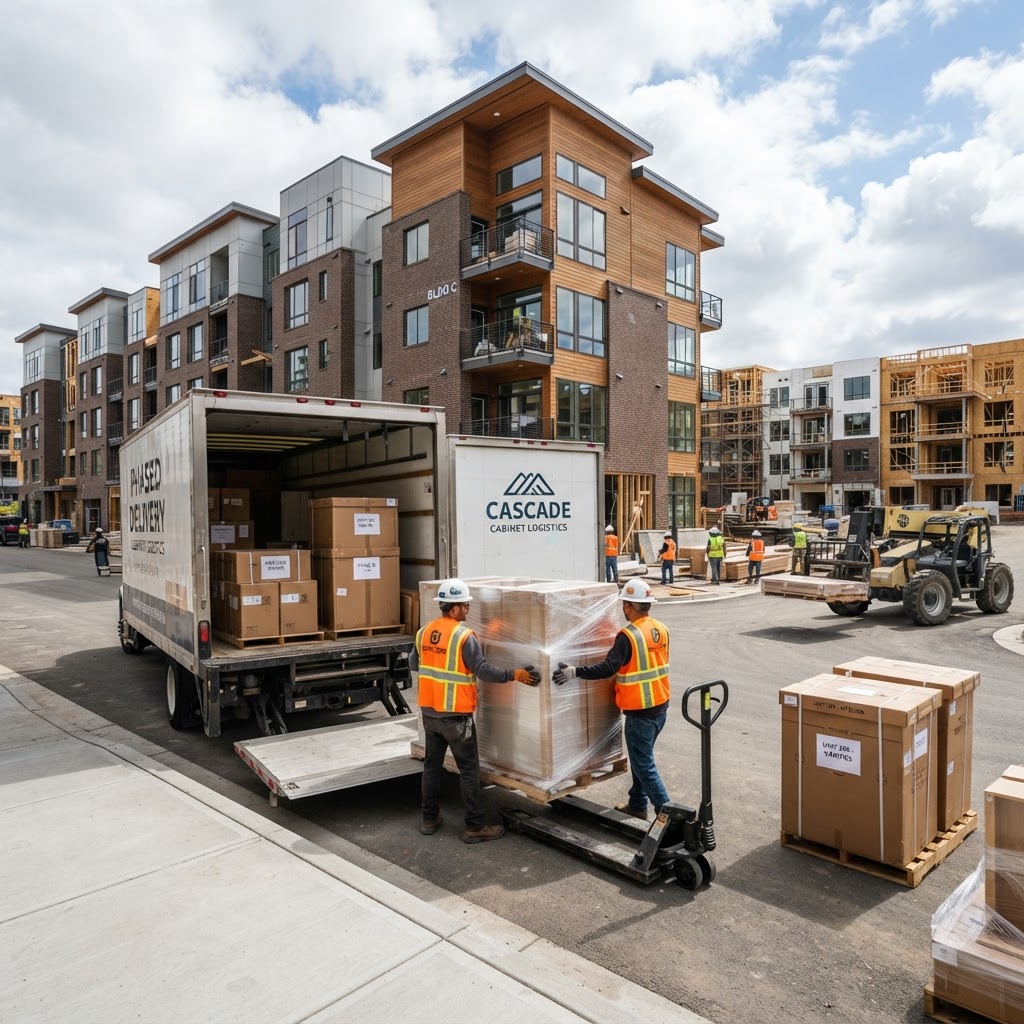
- Phased Deliveries: Commercial projects require floor-by-floor or building-by-building drop shipments. Suppliers without local warehousing force contractors to store casework on unfinished job sites, inviting jobsite damage and moisture exposure.
Partnering with suppliers maintaining extensive regional inventory and dedicated commercial shipping channels gives developers the flexibility to stage units predictably.
5. Regional Sourcing for Minnesota Trade Professionals
Batch Cabinets supports general contractors, multifamily builders, and commercial dealers throughout Minnesota—including Mankato, Rochester, and the Twin Cities metro. Headquartered at 1116 N Riverfront Dr in Mankato, Batch Cabinets bridges the gap between commercial volume pricing and regional supply reliability.
- In-Stock Minnesota Inventory: Avoid the typical 8–12 week factory waiting period. Core collections are warehoused locally for prompt jobsite delivery, ensuring immediate availability for project staging and punch-list reorders.
- Commercial-Grade Specifications: All cabinetry features all-plywood construction with zero particleboard, standard dovetail drawer boxes, and durable soft-close hardware on all doors and drawers.
- Scalable Procurement Programs: Flexible buying structures—including tiered contractor and builder pricing along with direct container programs for large-scale multifamily projects—provide predictable budget control from planning to punch-out.
When specifying casework for high-density housing and senior communities, prioritize materials and logistics that protect project margins through handoff and beyond. Request a commercial quote or register for a trade account with Batch Cabinets to review specs, confirm local inventory, and coordinate your upcoming project schedule.