For multifamily developers, general contractors, and commercial framing teams, cabinetry procurement is rarely just an interior design decision—it is a critical line item that directly impacts construction financing, milestone scheduling, and punch-list velocity. When specifying hundreds of kitchens across apartment blocks, mixed-use builds, or build-to-rent communities, relying on traditional piecemeal distribution channels rapidly erodes profit margins.
Direct container programs provide the highest purchasing leverage available in the cabinetry sector. However, capturing direct-from-manufacturer unit economics without jeopardizing site timelines requires a thorough understanding of procurement logistics, packaging, and local inventory redundancy.
The Financial Economics of Container Cabinet Programs
Commercial builders evaluate cabinetry on total landed cost per unit and lifecycle durability. Container-load purchasing changes the procurement equation across several key financial metrics:
- Maximized Unit Discounts: Container programs eliminate regional retail markups and middleman handling surcharges, delivering wholesale pricing tiers tailored specifically for high-density multi-unit pipelines.
- Lower Freight per Box: Freight expenses compound quickly when ordering by the LTL (Less-Than-Truckload) pallet. Consolidating 700 to 900+ cabinet boxes into a single dedicated ocean/intermodal container dramatically reduces per-box transit expense.
- Standardized Spec Packages: Commercial container programs leverage high-volume production of consistent layouts. By committing to standardized box dimensions and popular transitional door profiles across studio, one-bedroom, and two-bedroom units, developers secure optimal factory batch runs.
Construction Value Engineering Without Degrading Specs
A frequent misstep in value engineering multifamily casework is substituting structural materials with low-grade particleboard or paper-wrapped face frames. In commercial rental environments, particleboard substrates absorb moisture, degrade at hinge points, and generate excessive call-backs during tenant turnover.
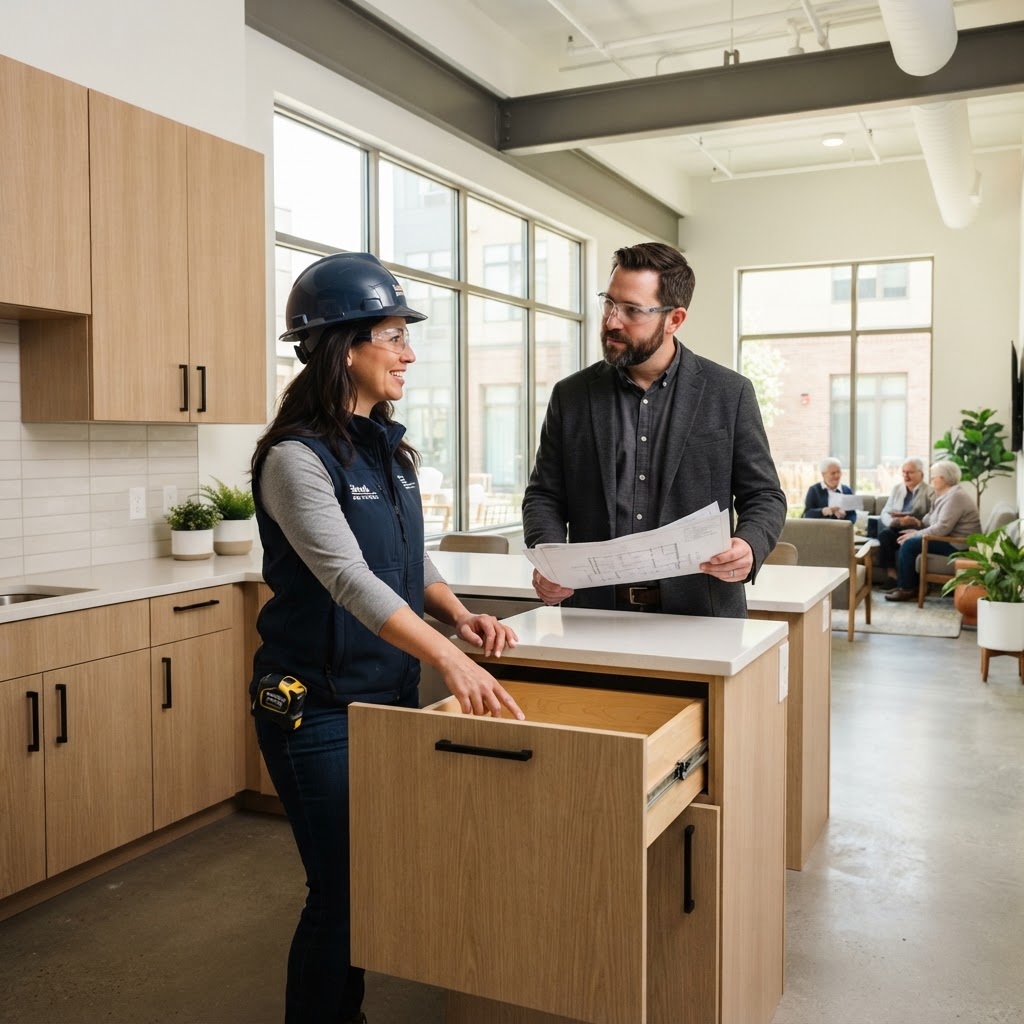
High-performing container programs focus on structural integrity. At Batch Cabinets, volume pricing does not mean sacrificing materials: our collections are manufactured with all-plywood box construction, solid dovetail drawer boxes, and integrated soft-close hinges standard. You hit competitive proforma targets while installing millwork built to handle commercial tenant wear.
Logistics Realities: Scheduling, Demurrage, and Offloading
While the pricing of a factory-direct container is attractive, shipping full containers directly to an active Minnesota jobsite introduces significant operational risks if not managed properly.
1. Phasing vs. Bulk Delivery
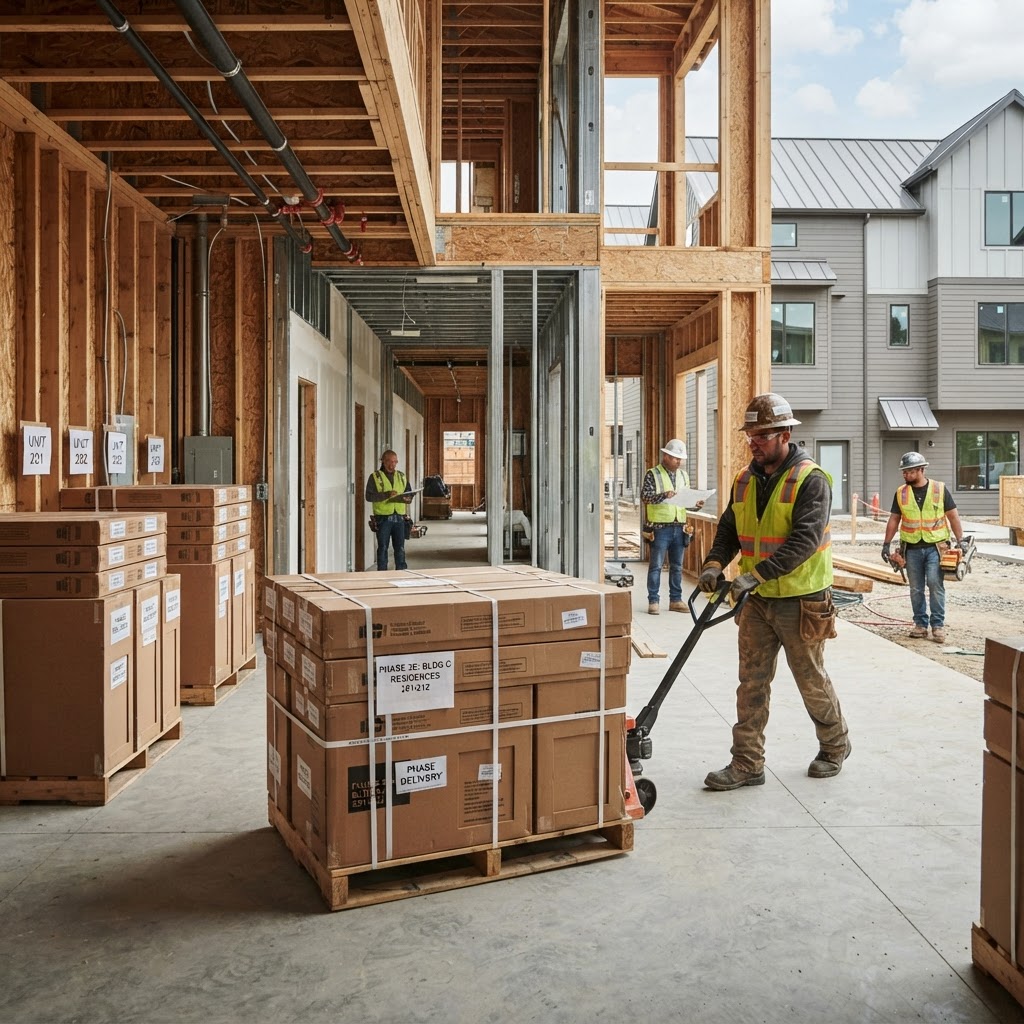
General contractors rarely have the staging space to drop two to four 40-foot high-cube containers on-site simultaneously. If your framing, drywall, or mechanical rough-ins are still progressing on upper floors, storing hundreds of assembled boxes creates site congestion, fire-safety bottlenecks, and unmanaged exposure to moisture.
2. Port and Rail Transit Variance
Global freight channels can be volatile. Unanticipated rail terminal holds or customs inspections can disrupt drywall-to-trim handoffs. A missed installation window impacts countertop templates, finish plumbing, and electrical trim-outs across dozens of units at once.
3. Container Demurrage and Staging Windows
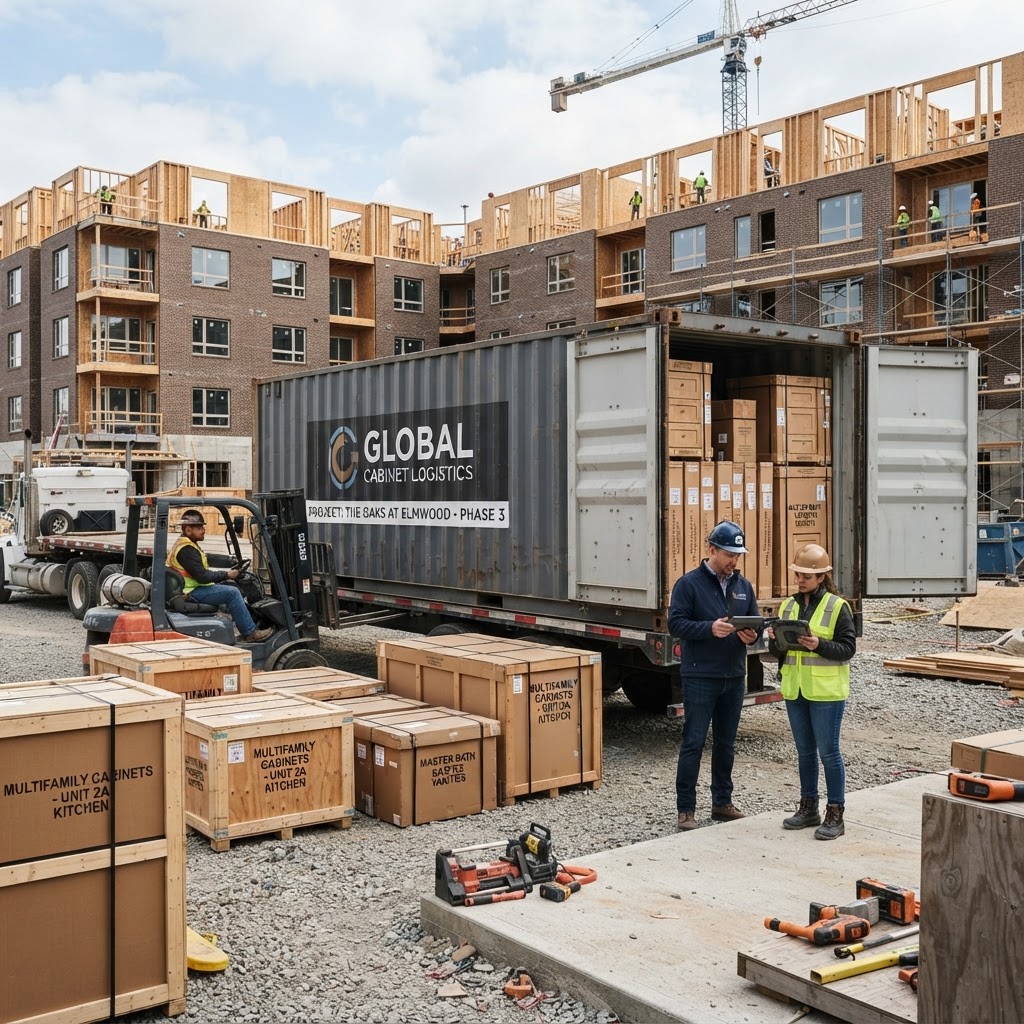
Steamship lines and drayage carriers impose strict detention and demurrage clocks. Dropping a container on a congested metro site—whether in Minneapolis, Rochester, or Mankato—requires immediate crane or forklift staging and dedicated labor to unload 40,000 lbs of freight before detention penalties accrue.
The Hybrid Model: Container Pricing Backed by Regional Warehousing
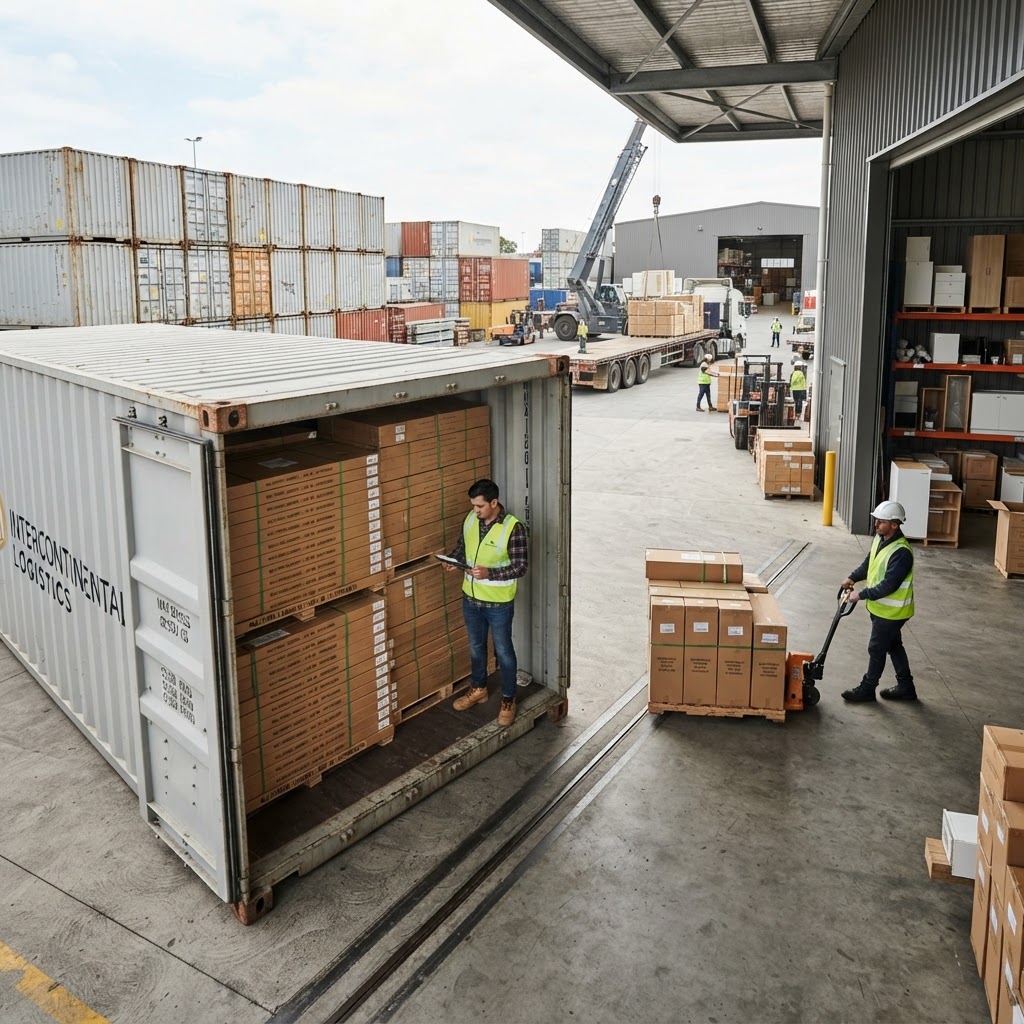
To eliminate the risk of port delays and jobsite congestion, forward-thinking general contractors use a hybrid procurement model: buying at container volume tiers while leveraging a regional distributor to handle intake, quality inspection, and staged deliveries.
Batch Cabinets operates out of our central facility at 1116 N Riverfront Dr in Mankato, MN. This operational footprint enables a dependable hybrid approach for Minnesota projects:
- Batch Container Sourcing: Secure aggressive volume tiers based on total project square footage and unit count.
- Local Warehousing & Phased Dispatch: Instead of dropping an entire container into an active mud-and-gravel jobsite, shipments can be received, staged, and delivered building-by-building or floor-by-floor via dedicated flatbeds or box trucks.
- No 8–12 Week Factory Delays for Punch-List Items: The most expensive cabinet is the one missing cabinet that stalls a Certificate of Occupancy. Traditional direct-import models leave builders stranded if a box arrives damaged or field framing requires an unexpected filler or base end. Because Batch Cabinets maintains robust, in-stock inventory locally in Mankato, punch-list replacement pieces, trim fillers, and panels are accessible within hours or days—not months.
Best Practices for Structuring Multifamily Container Orders
To maximize efficiency when specifying a container program for your next project, follow these trade-proven guidelines:
- Lock Specifications Early: Finalize architectural elevations, appliance clearances, and ADA unit counts well in advance of framing completion to prevent downstream change orders.
- Include Overages on High-Wear Components: Always package an additional 2–3% of universal fillers, scribes, toe kicks, and hinge hardware within the initial container order to absorb routine field adjustments.
- Coordinate Delivery with Mechanical Trades: Stage deliveries only after drywall, prime paint, and continuous interior climate control are fully active to prevent seasonal humidity expansion.
- Audit Hardware and Box Standards: Ensure all submittals confirm all-plywood box construction and robust dovetail joinery to satisfy owner/developer quality benchmarks and ensure long-term property performance.
Streamline Your Next Multifamily Build
Managing multifamily profitability requires a partner who understands both margin performance and jobsite realities. Batch Cabinets supplies commercial builders, GCs, and lumberyards across Minnesota—from the Twin Cities metro to Mankato and Rochester—with factory-direct container pricing supported by dedicated regional inventory.
Contact our commercial accounts team today to discuss container program tiers, review spec sheets, or open a dedicated builder trade account.