All-Plywood vs. Particleboard Cabinet Construction: What Builders Need to Know
For general contractors, high-volume home builders, and multifamily developers, the choice between all-plywood and particleboard (often marketed as furniture board) cabinet construction isn't just an aesthetic preference—it is a strategic decision that impacts job site efficiency, structural longevity, and the frequency of post-close callbacks. While 'value engineering' often points toward particleboard to shave initial costs, the hidden expenses of handling, installation, and moisture-related failures can quickly erode those savings. In the Minnesota market—where extreme humidity fluctuations and demanding construction schedules are the norm—understanding the mechanical differences between these two materials is critical for maintaining professional standards and project margins.
The Material Science: Stability and Screw-Holding Power
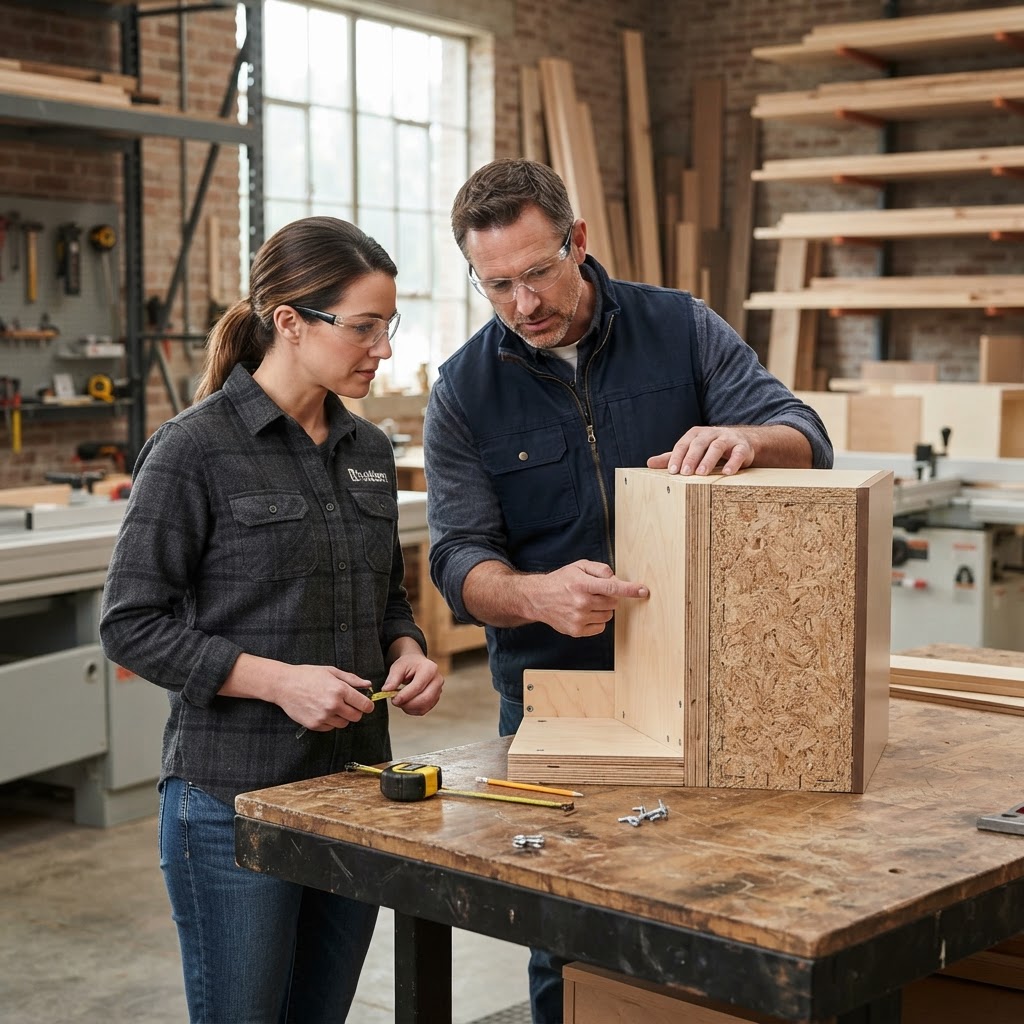
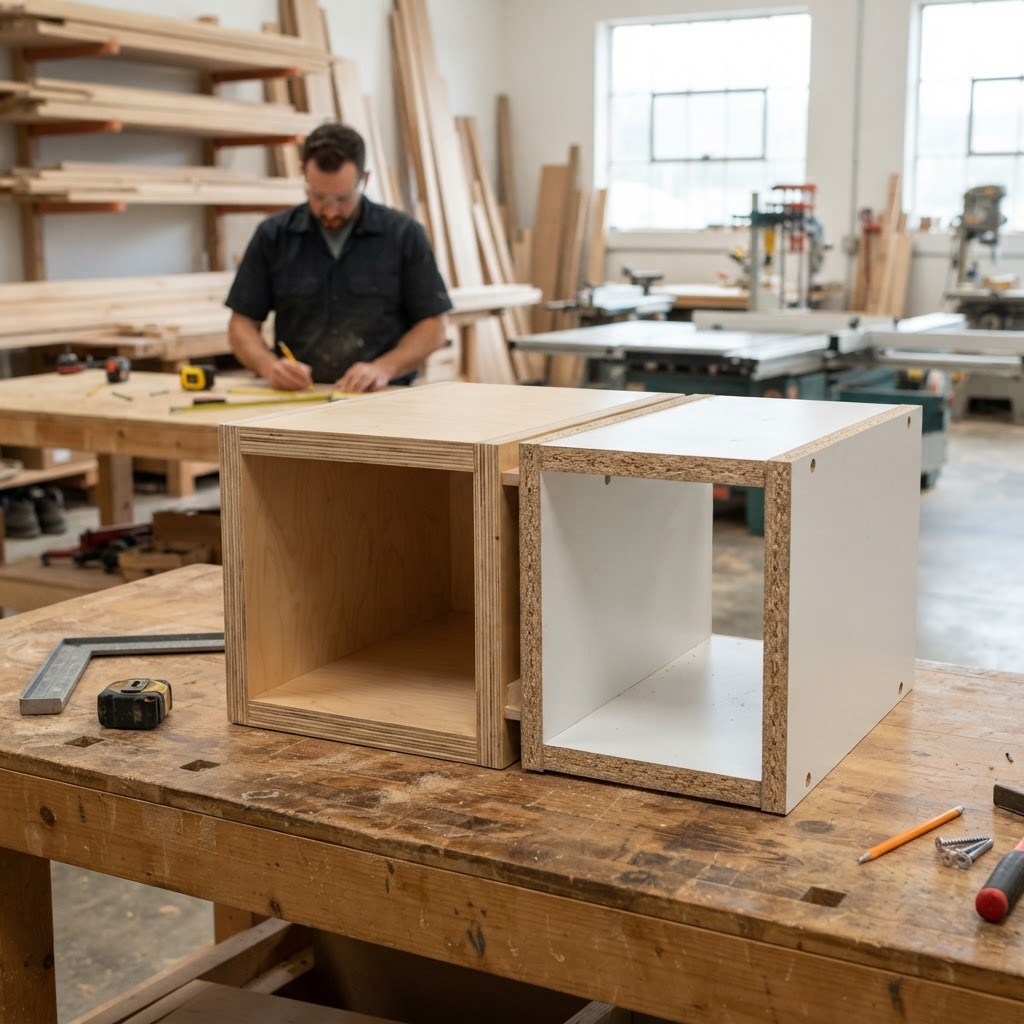
The fundamental difference between these two substrates lies in their composition and internal structure. Particleboard is manufactured from wood chips, sawmill shavings, and resin, compressed into a dense sheet. While this creates a uniform surface, it lacks the internal structural network found in natural wood. Plywood, conversely, is constructed from thin layers of wood veneer glued together in a cross-grain pattern. This 'cross-lamination' is the key to its superior performance.
For the trade professional, this cross-grain construction translates directly to fastener retention. The alternating grain layers in plywood 'grip' screws and mechanical fasteners from multiple angles. Whether you are hanging heavy wall cabinets or securing thick stone countertops, plywood provides the mechanical resistance necessary to prevent screw pull-out. In contrast, particleboard lacks a continuous grain structure, making the internal bond weaker. Over time, or under the stress of heavy use, screws in particleboard are significantly more likely to strip or pull through the material, leading to sagging hinges, compromised box integrity, and inevitable service calls.
The Minnesota Climate: Moisture Resistance and Swelling
In the Upper Midwest, cabinets are subjected to significant environmental stress. From the high humidity of a Minnesota summer to the dry, forced-air heat of a sub-zero winter, cabinet boxes are constantly expanding and contracting. Particleboard is notoriously hydroscopic, meaning it actively absorbs moisture from the surrounding environment. If a plumbing leak occurs under a sink—a common occurrence during the life of a kitchen—or if high humidity permeates a job site before the HVAC system is fully operational, particleboard absorbs that moisture like a sponge.
This leads to 'mushrooming,' a permanent swelling of the wood fibers that cannot be reversed. Once a particleboard box swells, the structural stability is permanently compromised, and the finish often delaminates. All-plywood construction offers significantly higher moisture resistance. While no wood product is entirely waterproof, plywood’s laminated layers and high-quality adhesives provide the dimensional stability required to withstand the rigors of a typical Minnesota job site and the long-term reality of wet areas like kitchens and baths.
Structural Integrity Under Load
Modern kitchen designs frequently utilize heavy quartz or granite surfaces, placing immense pressure on the cabinet infrastructure. A standard run of base cabinets must support hundreds of pounds of dead load without bowing or shifting. Plywood boasts a much higher strength-to-weight ratio than particleboard. Because particleboard is heavy and brittle, it is prone to fracturing if dropped or mishandled during transit or installation. Plywood boxes are more resilient, maintaining their squareness even when subjected to the torsional stresses of being moved around a job site or installed on slightly uneven subfloors. This structural rigidity ensures that doors and drawers remain aligned long after the installation is complete.
Impact on Installation and Job Site Efficiency
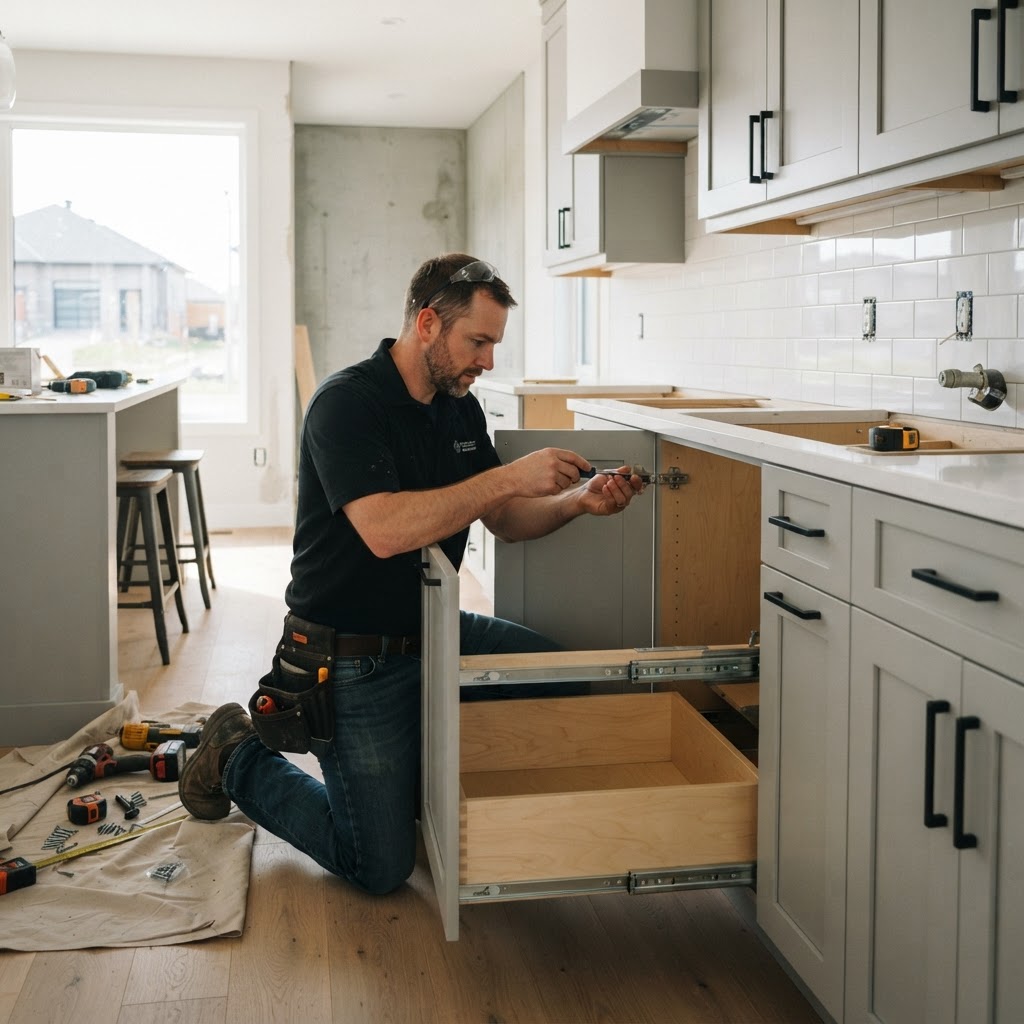
For a General Contractor or a multifamily developer, time is the primary variable in profitability. Plywood offers several distinct advantages that streamline the installation process:
- Weight: Plywood is significantly lighter than the dense resins used in particleboard, making wall cabinet installation faster and reducing physical strain on installation crews.
- Durability in Transit: Particleboard corners are prone to crushing and blowout during shipping. A damaged cabinet on delivery day can stall an entire crew. Plywood’s impact resistance reduces these delays.
- On-Site Modifications: When a crew needs to notch a cabinet for unexpected plumbing or electrical runs, plywood maintains its integrity and provides a clean cut. Particleboard often crumbles or chips during on-site cutting, requiring additional finish work or full replacements.
At Batch Cabinets, we have eliminated the particleboard variable entirely. Our inventory is exclusively all-plywood construction. By standardizing plywood, we ensure that our partners in Mankato, Rochester, and the Twin Cities are installing a product that reflects the quality of their overall build.
The Standard Problem: Beyond the Box
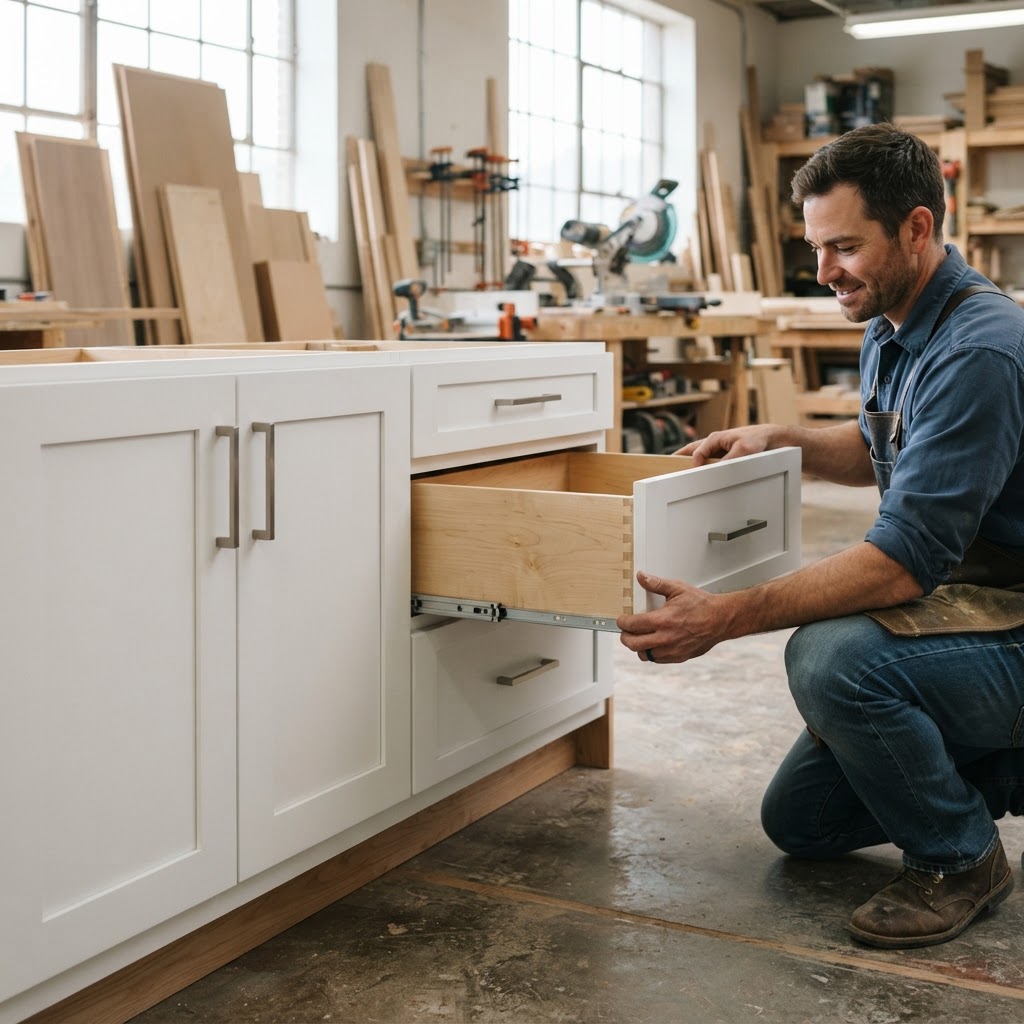
A high-quality plywood box is only as good as the hardware and joinery attached to it. Many wholesale suppliers offer plywood as an 'upgrade' while still utilizing inferior drawer glides or stapled drawer boxes. To meet the demands of the professional trade, cabinet specifications must be holistic. At Batch Cabinets, our all-plywood construction is paired with dovetail drawer boxes, providing the mechanical joinery necessary for long-term durability. Furthermore, soft-close hinges and glides are standardized across our lines to meet the expectations of modern buyers and tenants without requiring a change order.
Supply Chain Realities: Inventory vs. Lead Times
For builders and developers, the best material in the world is useless if it is sitting in a factory for 12 weeks. The 'standard' lead times in the cabinet industry often force GCs to choose inferior, locally available particleboard products just to keep a project on schedule. Batch Cabinets operates differently. Headquartered in Mankato, we maintain a massive in-stock inventory of all-plywood cabinets. This allows our partners to bypass the 8–12 week factory wait times that plague the industry. Whether you are finishing a single-family custom home in Rochester or a 100-unit multifamily project in Minneapolis, we provide immediate access to professional-grade cabinetry.
The Bottom Line for Professionals
While particleboard may offer a lower entry price point, the 'total cost of quality' tells a different story. Between increased installation time, higher breakage rates during transit, and the risk of moisture-related callbacks, the perceived savings often vanish before the project is even closed. For builders who prioritize reputation and ROI, all-plywood construction is the professional standard. It provides the structural foundation necessary for high-end finishes and the durability required for high-traffic environments.
Partner with Batch Cabinets
Batch Cabinets is dedicated exclusively to the trade. We provide the infrastructure Minnesota builders need to succeed, including trade-only pricing tiers for GCs and developers, and scalable container programs for large-scale multifamily developments. Centrally located at 1116 N Riverfront Dr in Mankato, we are positioned to serve the entire Minnesota region with high-quality, in-stock cabinetry.
Contact Batch Cabinets today to request a quote for your next project or to open a builder account.