On modern residential, multifamily, and commercial jobsites, scheduling discipline determines whether a project maintains margin or bleeds carry costs. While rough trades, drywall, and trim work can run like clockwork, one item consistently disrupts the critical path: cabinetry.
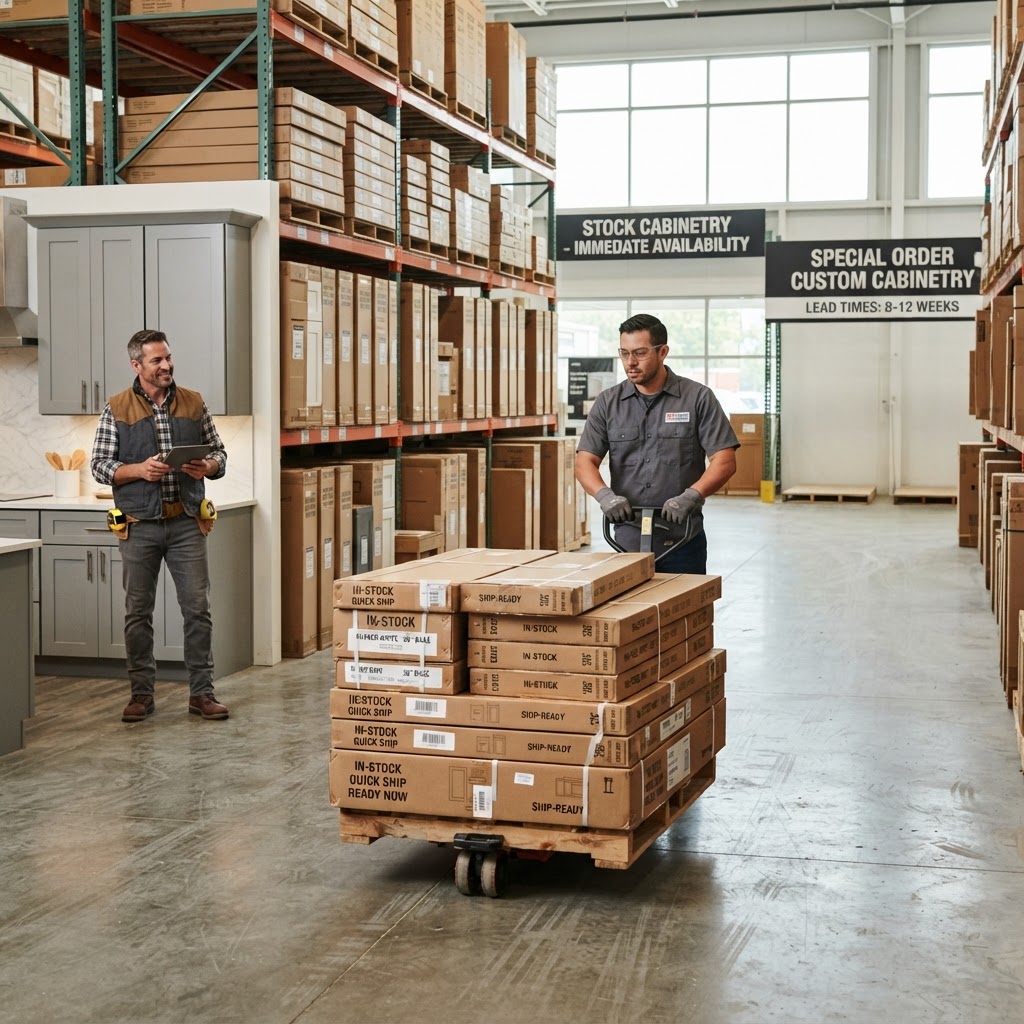
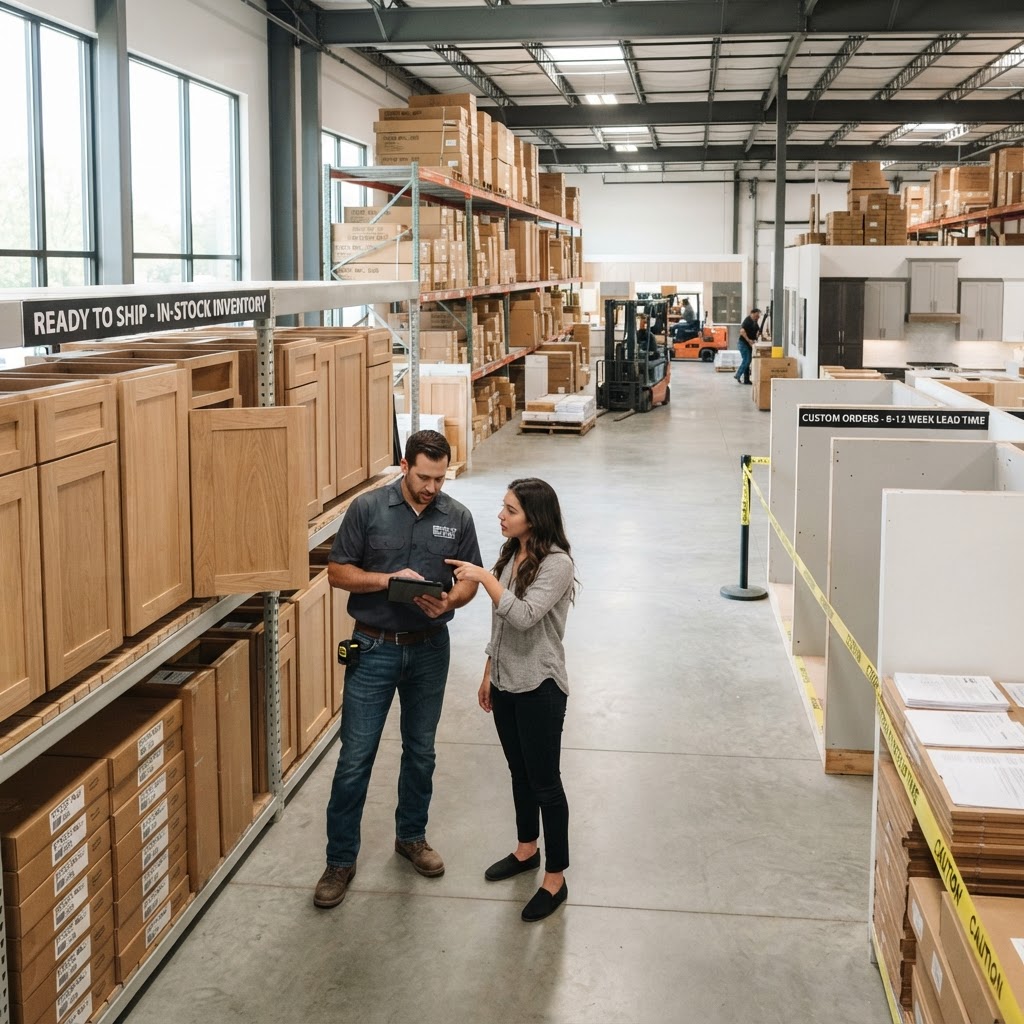
For years, standard practice across Minnesota has pushed general contractors, custom home builders, and kitchen dealers into 8- to 12-week factory-order production cycles. However, volatile supply chains, extended backlogs, and multi-tier freight logistics mean a single delayed cabinet can stall countertop templating, finish trades, final inspections, and loan draws.
Sourcing in-stock wholesale cabinetry solves these scheduling bottlenecks, offering commercial advantages over traditional factory-order programs.
The True Financial Cost of the 8–12 Week Factory Queue
When a factory estimates an 8- to 12-week lead time, project managers often build that window directly into the Gantt chart. But in made-to-order manufacturing, that timeframe is rarely static. Unplanned millwork backorders, hardware shortages, freight carrier bottlenecks, and plant re-runs introduce unpredictable float to your schedule.
When cabinet deliveries slip by even two to three weeks, the downstream impacts hit hard:
- Countertop Sequencing Halts: Fabricators cannot field-template stone until base cabinets are anchored, level, and plumb. A delay in casework automatically pushes out template dates, fabrication queues, and stone install windows.
- Trade Stacking and Rescheduling Conflicts: Finish carpenters, plumbers setting fixtures, backsplash tile installers, and appliance delivery crews must all be pushed back. In a competitive labor market across the Twin Cities, Rochester, and Southern Minnesota, rescheduling sub-trades on short notice risks losing your slot for weeks.
- Carrying Costs and Retainage Holds: On spec builds and multifamily developments, delayed completions translate directly into extended construction loan interest, postponed draws, and deferred certificate of occupancy issuance.
- The Freight Damage Trap: If a custom factory order arrives with a crushed face frame or missing specialty end panel, the replacement cycle typically resets the queue, requiring another multi-week turnaround to complete a punch list.
The In-Stock Advantage: Turning Weeks into Days
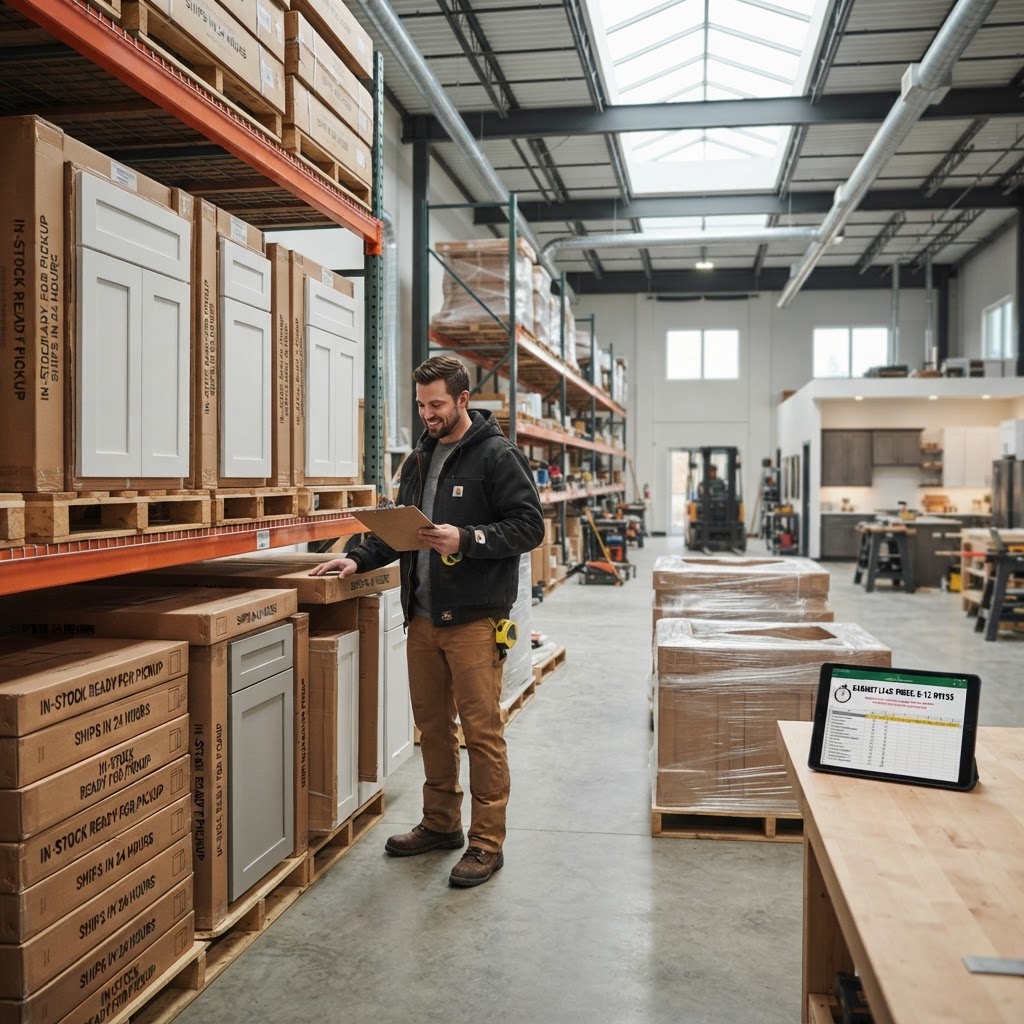
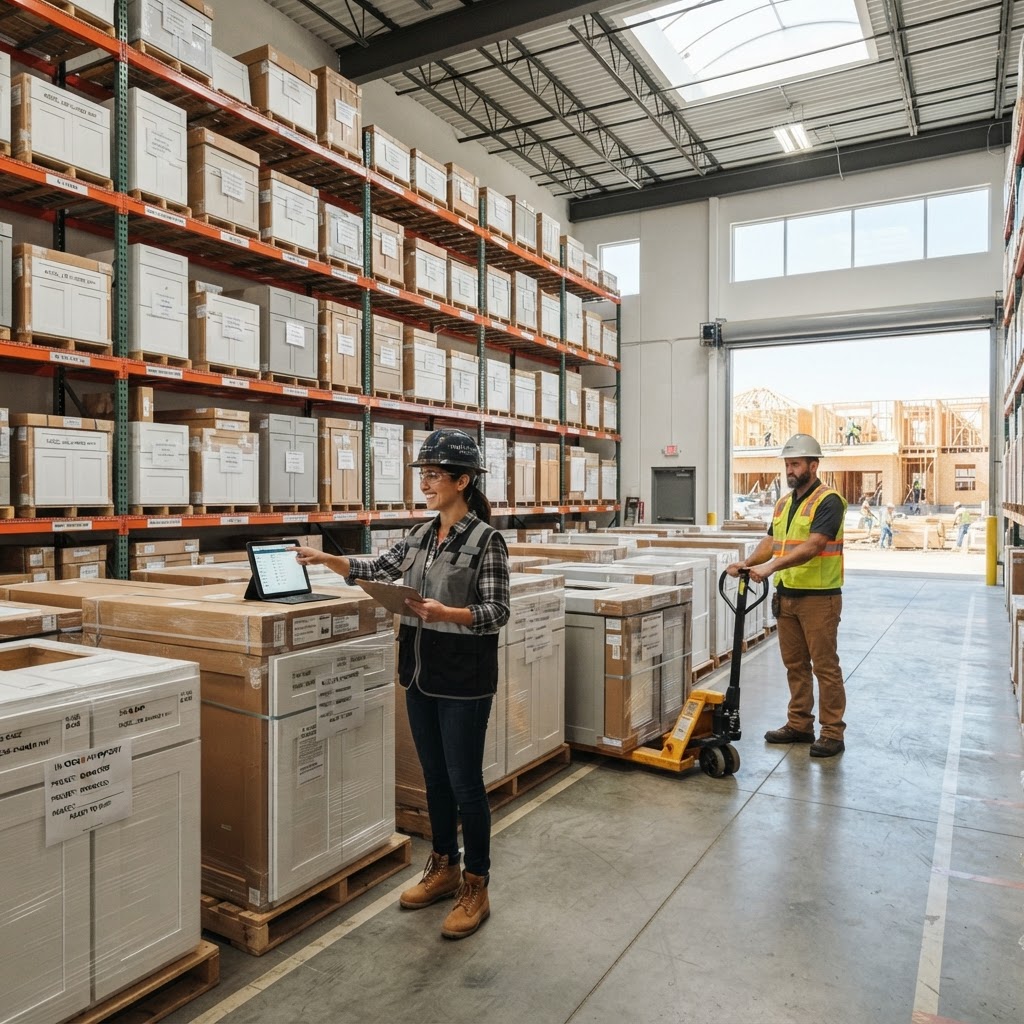
Working with an in-stock wholesale supplier decouples your installation schedule from factory production schedules. Instead of placing an order and waiting for timber to be sourced, components milled, and boxes palletized at a distant plant, cabinets are pulled from local floor inventory.
1. Predictable Trade Handoffs
In-stock inventory allows GCs and framing crews to verify accurate rough openings on-site before pulling inventory. Rather than locking down cabinet specs six months before drywall, builders can finalize layouts and procure product on predictable timetables. Finish carpenters can stay continuous without downtime between drywall cure and interior finish trim.
2. Punch-List Speed and On-Site Resolution
Jobsite realities mean walls can run out of square, plumbing risers may shift slightly, or a trade crew might drop a heavy tool onto a drawer face. When working with an 8- to 12-week factory order line, obtaining a replacement drawer head or filler strip turns into a multi-week ordeal. With an in-stock partner, replacement components, additional fillers, and matching trim pieces are readily available, keeping your final punch list moving without delaying owner walk-throughs.
Overcoming the "Stock Means Lower Quality" Myth
Historically, the wholesale market associated "in-stock" with bargain-tier, flat-pack units made of pressed particleboard that deteriorated when exposed to standard jobsite humidity. That standard is obsolete.
Modern in-stock commercial lines are engineered to meet the same structural and aesthetic benchmarks as custom millwork, minus the custom lead times:
- All-Plywood Construction: Cabinets engineered with all-plywood box construction resist racking, hold mechanical fasteners securely, and maintain structural integrity in high-moisture conditions like kitchens, laundry rooms, and baths. No particleboard or compressed flakeboard core.
- Dovetail Drawer Boxes: Solid wood drawers with robust dovetail joinery provide lasting commercial-grade durability against repeated cycling.
- Soft-Close Hardware Standard: Premium soft-close European-style concealed hinges and under-mount drawer slides come integrated directly out of the box, eliminating the need to pay for upcharges or wait on separate hardware shipments.
Builders gain a high-end, furniture-grade cabinet package that passes demanding client inspections while shaving two months off the trade cycle.
Sourcing Directly in Minnesota: Regional Strategic Support
Batch Cabinets operates as a wholesale supplier centered in Minnesota, headquartered at 1116 N Riverfront Dr in Mankato. Sourcing casework within driving distance of your projects simplifies regional logistics across the state.
[ Factory Order Route ]  --> 8-12 Weeks Factory Queue  --> Cross-Country Freight --> Missing/Damaged Rerun Risk
[ In-Stock Route ]       --> Batch Cabinets Warehouse  --> Direct Fulfillment   --> Same-Week Jobsite Staging
Whether running production builds in Rochester, commercial or multifamily jobs in Minneapolis and the Twin Cities metro, or custom infill in Southern Minnesota, having regional inventory keeps operations lean:
- Tiered Contractor Pricing: Direct wholesale tiers protect gross margins across volume builders, general remodelers, and lumberyards without middleman retail markup.
- Container Programs for Multifamily Projects: For multi-unit developments requiring volume economies, dedicated direct container programs can be staged and managed with regional overflow backup, mitigating site staging bottlenecks.
- Hands-On Trade Accountability: Dealing directly with a regional trade distributor provides responsive communication and accurate inventory updates, avoiding remote customer service queues.
Streamline Your Project Schedules with Batch Cabinets
Contractors and builders who consistently compress schedules protect their margins and earn repeat business. Relying on uncertain 8- to 12-week factory lead times creates an unnecessary scheduling liability.
If you are a home builder, general contractor, multifamily developer, or kitchen and bath dealer looking to eliminate lead-time drag across Minnesota, switch to an in-stock cabinet supplier built around trade workflows.
Contact Batch Cabinets in Mankato today to discuss your upcoming project schedules, review specification sheets, and set up your direct wholesale builder account.